Fiberglass or Concrete: Choosing Your Tank Material
Both materials run the same Clarifying Trio process. The differences are in weight, installation, and site conditions.
August 20, 2026 · 3 min read
Same Process, Different Shell
AquaKlear manufactures treatment systems in both fiberglass and concrete. The internal process is identical: both use the Clarifying Trio (aeration, clarification, AK Skimmer), both hold NSF/ANSI Standard 40 Class 1 certification, and both produce effluent that is 98.8% cleaner than incoming wastewater. The choice between them is about what sits best on your property, not about treatment quality.
Fiberglass
Fiberglass tanks are significantly lighter than concrete. A residential-capacity fiberglass unit can be transported on a standard flatbed and positioned with lighter equipment than a concrete tank of the same volume. On properties with limited access, steep grades, or soft ground where heavy machinery would do damage, fiberglass is often the practical choice.
Fiberglass does not corrode. The material is inert to the chemicals and biological activity inside a wastewater treatment tank. It will not rust, pit, or degrade from the hydrogen sulfide gas that forms in any sewage environment. Cracks from ground movement are possible but uncommon in a properly bedded installation.
One thing to consider with fiberglass: buoyancy. A fiberglass tank is light enough that in areas with a high water table, groundwater pressure can push an empty or partially filled tank upward. Proper anchoring during installation prevents this, and any experienced installer will know the local water table conditions. AquaKlear's dealers handle this as part of standard site evaluation.
Concrete
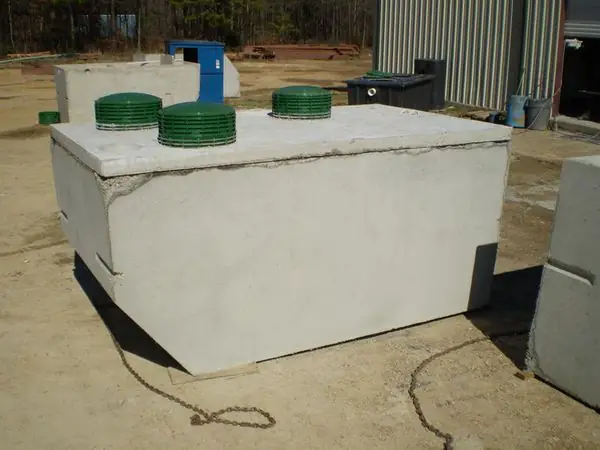
Concrete tanks are heavy, and that weight is an advantage in certain conditions. A concrete unit stays put under its own mass, so high water tables and loose, sandy soils are less of an installation concern. There is no anchoring requirement beyond standard bedding.
Concrete is durable and well understood by local contractors. Most septic installers have worked with concrete tanks before, so the installation process fits existing equipment and site practices. The material handles compression loads from backfill and vehicle traffic above grade without special reinforcement in most residential applications.
The trade-off is delivery. Concrete tanks require a crane or heavy equipment to set in place, and the access road and yard surface need to support the load. On tight lots or properties with finished landscaping, the installation footprint is larger than for fiberglass.
Capacity Is the Same Either Way
Both materials are available in capacities from 500 to 1,500 gallons per day, covering residential use and small commercial applications. Sizing depends on the number of bedrooms (which determines peak flow under most local codes), not on the tank material. AquaKlear's team can help determine the right capacity for your property.
How to Decide
Four questions that usually settle it:
- Is the water table high on your property? Concrete resists buoyancy without additional anchoring.
- Is site access limited, or would you prefer to avoid heavy equipment on finished landscaping? Fiberglass is lighter to deliver and position.
- What do local installers work with most? If every installer in your area specializes in concrete, their pricing and efficiency will reflect that.
- Does your county or state have a material preference in its permitting guidelines? Some jurisdictions specify or prefer one material. Your installer or AquaKlear can confirm.
Neither material is categorically better. Both deliver the same treatment outcome, hold the same certification, and serve the same capacity range. The right choice is the one that fits your site conditions and installation logistics.
To discuss sizing and material options for your property, call AquaKlear at (877) 936-7711.
AquaKlear, Inc., (601) 936-7711
Call (601) 936-7711More articles
Aerobic vs. Septic: What Homeowners Should Know Before Choosing
Two systems that handle the same job in fundamentally different ways, and the practical differences a homeowner will notice.
How the Clarifying Trio Treats Wastewater in a Single Tank
Three stages, one tank, and a nightly cleaning cycle that runs on its own.