How the Clarifying Trio Treats Wastewater in a Single Tank
Three stages, one tank, and a nightly cleaning cycle that runs on its own.
August 20, 2026 · 3 min read
Stage One: Aeration
Everything starts with oxygen. A compressor, mounted outside the tank at ground level, pushes air down through a fine-bubble diffuser sitting at the bottom of the aeration chamber. The diffuser breaks the airstream into small bubbles that rise slowly through the wastewater, dissolving oxygen into the liquid as they climb.
That dissolved oxygen is what feeds the aerobic bacteria. These microorganisms consume organic waste in suspension. They break down solids faster and more thoroughly than the anaerobic bacteria in a gravity-fed septic tank. The continuous air supply keeps the bacterial colony large and active, which is why the system rebounds within 24 hours after a heavy-use day rather than struggling for days or weeks.
When a new system is installed, the aerobic colony takes six to twelve weeks to reach its full working population. After that, it is self-sustaining as long as the compressor runs and the homeowner follows the care guidelines for what should not go into the system.
Stage Two: Clarification
After aeration, the water flows into the clarifying chamber. This is a quiet zone. There is no forced air here, so the flow slows and gravity takes over. Particulate matter that has been partially processed but not fully consumed settles toward the bottom, where it is returned to the aeration chamber for another pass.
The clarification stage is what separates aerobic treatment systems that produce clean effluent from those that produce merely oxygenated effluent. Without it, some partially treated solids would leave the tank. With it, only water that has passed both stages exits.
Stage Three: The AK Skimmer
Fats, oils, and other lightweight material float rather than settle. Standard clarification misses them. AquaKlear designed the AK Skimmer, a dual-port processor, to handle this exact class of waste.
Every night at midnight, the AK Skimmer runs a 15-minute cycle. It sweeps the surface of the clarifying chamber, captures anything floating, and returns it to the aeration tank where the aerobic bacteria can process it. AquaKlear calls this the Midnight Microbial Snack. The name is light, but the function is real: without surface skimming, floatable grease builds up until it either exits the tank or forms a mat thick enough to starve the biology underneath.
What Leaves the Tank
After passing through all three stages, the effluent is 98.8% cleaner than the wastewater that entered. That number was measured during nine months of continuous testing by NSF International and Gulf Coast Testing Lab. The discharge is odorless and exceeds the U.S. EPA Secondary Treatment standard.
For comparison, a conventional septic tank's effluent still carries a heavy biological oxygen demand and typically relies on hundreds of square feet of drain field for the soil to finish the job. With the Clarifying Trio, the treatment is substantially complete before the water leaves the tank.
Why One Tank Matters
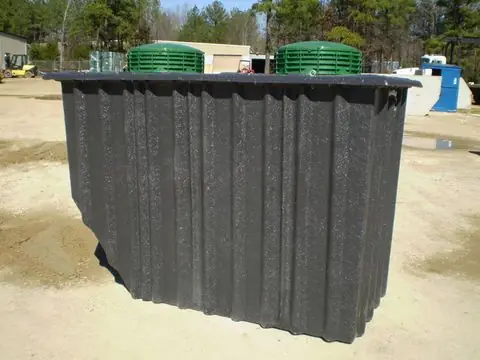
Traditional systems split the work across a tank, a distribution box, and a drain field, each a separate installation and a separate potential failure point. The Clarifying Trio runs all three stages inside a single vessel. There is no external distribution box to crack or clog. The compact footprint fits on properties where a full conventional layout would not.
If you want to understand how the system would work on your property, AquaKlear's team can walk through the sizing and layout. Call (877) 936-7711.
AquaKlear, Inc., (601) 936-7711
Call (601) 936-7711More articles
Aerobic vs. Septic: What Homeowners Should Know Before Choosing
Two systems that handle the same job in fundamentally different ways, and the practical differences a homeowner will notice.
Maintaining Your Aerobic Treatment System: What Homeowners Need to Do
Aerobic systems need less intervention than most homeowners expect, but there are a few things that keep them running right.