Our Systems

Aerobic Wastewater Treatment

AquaKlear builds a single-tank system that replaces traditional septic with an all-aerobic process. Every unit holds NSF/ANSI Standard 40 Class 1 certification, earned after nine months of testing by NSF International and Gulf Coast Testing Lab. Effluent leaves the tank 98.8% cleaner than when it entered.

The Process

How the Clarifying Trio Works

Three stages happen inside one tank, with no external distribution box and no buried components out of reach.

01

Aeration

A fine-bubble air diffuser injects dissolved oxygen, feeding aerobic microbes that digest organic waste while it is still in suspension. These microbes work faster and more thoroughly than the anaerobic bacteria inside a conventional septic tank.

02

Clarification

In the clarifying chamber, heavier processed solids sink back to aeration for further treatment. Lighter particles settle out. The water that remains has shed virtually all suspended organic matter.

03

AK Skimmer

At midnight, the dual-port processor runs a 15-minute skimming cycle. It sweeps any floatable waste off the clarifying chamber surface and returns it to the aeration tank. By morning, the effluent is 98.8% cleaner than when it entered the system.

The Klear Facts

AquaKlear vs. Traditional Septic

A side-by-side look at what separates an aerobic treatment system from a conventional gravity-fed tank.

Process

AquaKlear A.T.S.

Forced air through a fine-bubble diffuser feeds aerobic bacteria that break down waste in suspension

Traditional Septic

Gravity-fed, relying on slower anaerobic bacteria

Rebound time

AquaKlear A.T.S.

Within 24 hours after heavy use

Traditional Septic

Slow recovery after parties or cleaning days

Footprint

AquaKlear A.T.S.

Compact, single-tank, no external distribution box

Traditional Septic

Larger tank plus a separate distribution box and leach field

Odor

AquaKlear A.T.S.

None

Traditional Septic

Low, but present

Siting flexibility

AquaKlear A.T.S.

Approved for locations where conventional septic cannot go

Traditional Septic

Limited by soil type and lot size

Materials

Fiberglass or Concrete

Both options use the same Clarifying Trio process and handle 500 to 1,500 gallons per day. The choice comes down to your soil, your site, and how the tank reaches you.
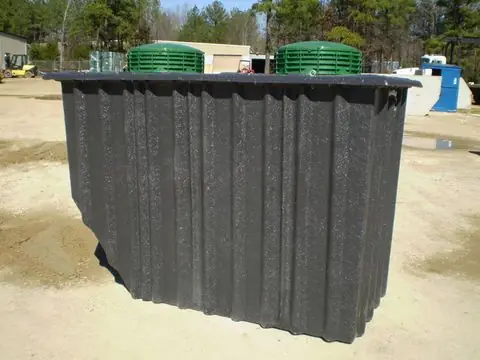
AquaKlear fiberglass treatment tank with green lids

Fiberglass

Lightweight and corrosion-resistant. A fiberglass shell will not degrade in acidic soils or areas with a high water table where concrete can erode over decades. The lower weight also makes transport and installation simpler on sites with limited equipment access.

Fiberglass tanks ship from the Pearl, Mississippi facility and can reach most dealer territories within days.
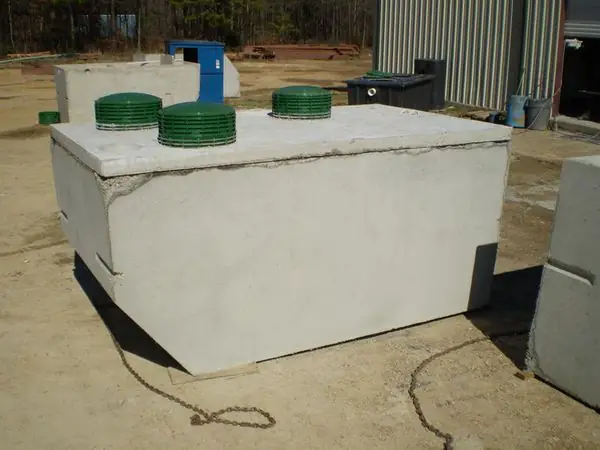
AquaKlear concrete treatment tank at Pearl, MS facility

Concrete

Heavier and naturally ballasted against uplift in saturated ground. Concrete tanks resist buoyancy forces that can push lighter units upward during flooding or heavy rain, making them the standard choice in areas with seasonal high water tables.

Local concrete pours are available in many dealer states, which can reduce freight costs on larger-capacity installations.

Specifications

System Details

Physical

Capacity range
500 to 1,500 gallons per day
Tank materials
Fiberglass or concrete
Design
Single-tank, all-in-one (no external distribution box)
Access points
Above-ground or ground-level

Process & Certification

Internal moving parts
None
Air system
Fine-bubble diffuser with a small external compressor
Certification
NSF/ANSI Standard 40 Class 1
Testing
9 months by NSF International and Gulf Coast Testing Lab

Ownership

Living With Your System

An AquaKlear system relies on aerobic bacteria to treat wastewater. A few household items can disrupt that biology. Keep these out of your drains and the system takes care of itself.

After installation, allow 6 to 12 weeks for the microbial population to reach full strength. During this startup period the system is working, but peak treatment efficiency builds gradually.

Maintenance

Items to keep out of your system

  • Strong disinfectants or bleaches (beyond small laundry and cleaning amounts)
  • Cooking oils, grease, or chemical wastes
  • Disposable diapers, tampons, sanitary napkins, or cigarette butts
  • Water softener discharge
  • Prescription and over-the-counter medications

Find Your Nearest Dealer

AquaKlear works with certified dealers and installers across 18 states. Call for a site assessment, permitting guidance, and installation.

Call (877) 936-7711